Small AI Models vs Big AI Models: How to Pick the Right Tool, Cut Costs, and Protect Privacy
Master the strategic decision framework between Small Language Models (SLMs) and Frontier Large Language Models (LLMs). Learn how modern engineering teams use intelligent model routing, on-premise local hosting, and targeted LoRA fine-tuning to slash inference costs by 80%, achieve sub-200ms response times, and guarantee 100% data privacy.
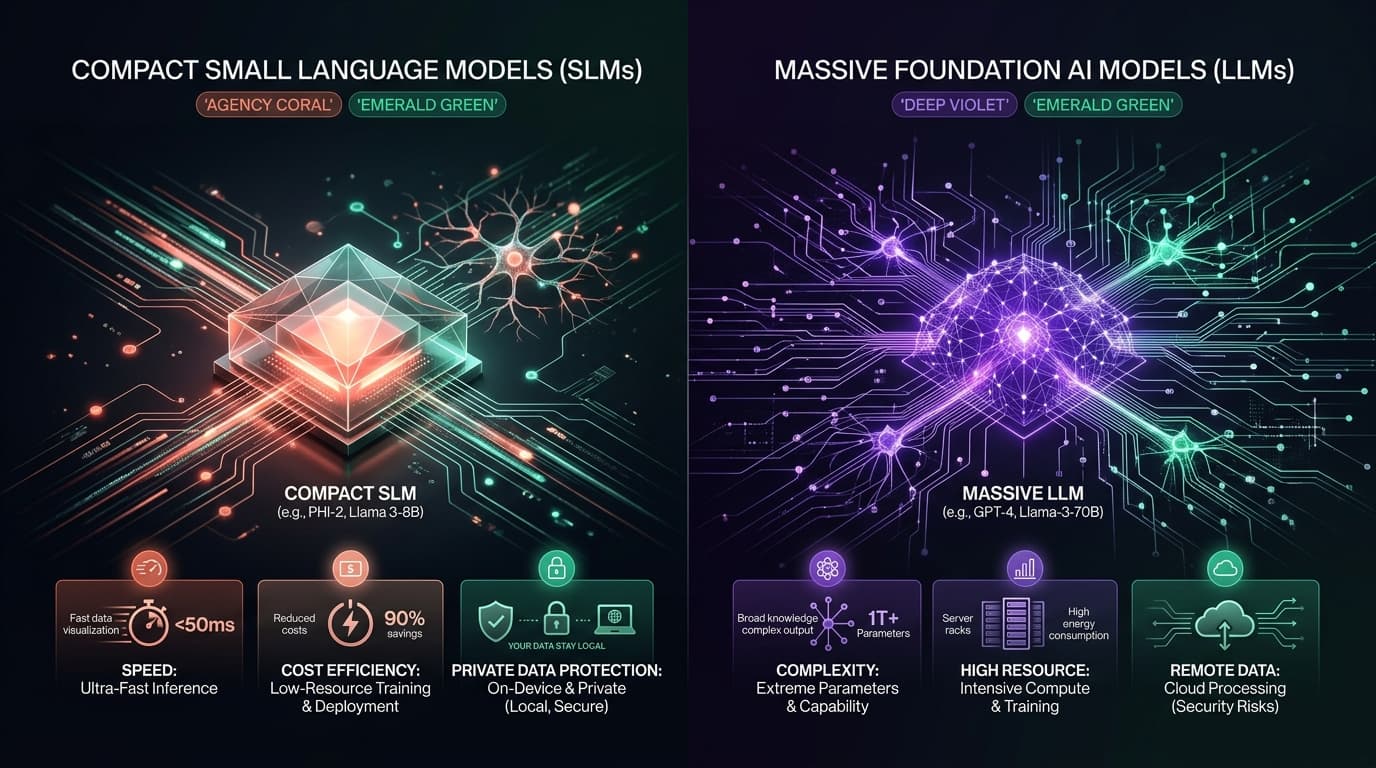
TL;DR: Defaulting to giant trillion-parameter foundation models for every business task is the leading cause of bloated cloud bills, sluggish response times, and enterprise data privacy headaches. In 2026, forward-thinking engineering teams rely on intelligent hybrid model routing. By delegating high-volume, structured tasks (like classification, entity extraction, data formatting, and search reranking) to specialized, locally-hosted Small Language Models (SLMs) (1B–8B parameters) while reserving massive frontier Large Language Models (LLMs) for multi-step reasoning and open-ended synthesis, businesses can slash inference costs by over 80%, reduce latency to under 200ms, and keep sensitive company data completely private on local servers. Explore our bespoke AI system creation services to build private, scalable AI architectures, read our deep-dive on Enterprise RAG Architecture in 2026, compare Vector Database Benchmarks 2026 for hybrid retrieval, discover how Knowledge Graphs beat basic search, implement AI security guardrails to prevent data leaks, and orchestrate autonomous multi-agent AI workflows.
The 5 W's of Choosing Between Small and Big AI Models
To understand how modern engineering teams pick the ideal AI model size for any business application, here is the complete breakdown using the 5 W's:
- Who: Technical founders, AI engineers, CTOs, and product leaders who need fast, accurate, cost-effective, and privacy-compliant AI features in production.
- What: Intelligent Model Selection & Hybrid Routing—the practice of matching specific business tasks to the most efficient AI model architecture, balancing compact Small Language Models (1B–8B parameters) with giant frontier foundation models (70B–1T+ parameters).
- Where: Deployed across private on-premise servers, edge devices, dedicated virtual private clouds (VPCs), or serverless cloud inference gateways.
- When: Implemented whenever an application scales beyond prototype phase, when cloud LLM token bills start eating profit margins, when user-facing response times must drop below 300ms, or when strict privacy regulations (HIPAA, GDPR, SOC2) prohibit sending data to third-party APIs.
- Why: Using a massive generalist model for simple data extraction wastes thousands of dollars a month in compute and adds 2+ seconds of user latency. Using the right tool for the job maximizes profit margins, delivers instant user feedback, and protects proprietary business data.
┌─────────────────────────────────────────────────────────────────────────┐
│           The 5 W's: Choosing Between Small and Big AI Models           │
├──────────────┬──────────────────────────────────────────────────────────┤
│ Dimension    │ Plain-English Explanation                                │
├──────────────┼──────────────────────────────────────────────────────────┤
│ 👤 WHO       │ CTOs, AI engineers & founders building scalable software │
│ 🧠 WHAT      │ Hybrid routing between specialized SLMs and frontier LLMs│
│ 🔒 WHERE     │ On-premise VPCs, edge nodes, and secure cloud gateways   │
│ ⏱️ WHEN      │ Scaling usage, cutting token costs, or securing data     │
│ 🎯 WHY       │ Slash AI bills by 80%+, achieve <200ms speed & 100% privacy│
└──────────────┴──────────────────────────────────────────────────────────┘
The Core Analogy: The Jumbo Cargo Jet vs. The Electric Courier Fleet
To understand why relying solely on giant frontier models is an operational trap, consider this everyday transportation comparison:
The Boeing 747 Jumbo Cargo Jet (Frontier Foundation LLMs)
Imagine you need to deliver a sealed envelope containing an urgent legal signature to an office three miles away.
Calling a massive frontier model (like GPT-4o, Claude 3.5 Sonnet, or Gemini 1.5 Pro) for a simple data extraction task is like chartering a Boeing 747 Cargo Jet for that three-mile envelope delivery:
- It requires an enormous runway and tons of jet fuel (massive GPU compute clusters and steep per-token cloud costs).
- It takes 45 minutes of pre-flight checks and taxiing before it leaves the tarmac (high time-to-first-token latency).
- Your confidential parcel must pass through public international airspace and third-party customs checkpoints (external third-party API exposure).
It is an engineering marvel capable of flying across oceans with tons of heavy machinery (solving complex, multi-step abstract reasoning), but using it for routine local deliveries will bankrupt your business.
The Agile Electric Courier Fleet (Specialized Small Language Models)
Now imagine maintaining a fleet of swift, purpose-built electric courier vans (compact 1B to 8B models like Llama 3.2, Mistral NeMo, or Phi-3.5) parked directly inside your private corporate garage:
- They navigate local streets instantly, pulling up to the recipient in minutes (sub-100ms response times).
- They recharge on a standard power outlet for pennies a day (fixed, low-cost local compute).
- The delivery never leaves your private perimeter, guaranteeing complete confidentiality (100% on-premise data privacy).
- When a massive international shipment arrives, your dispatcher seamlessly hands that specific task to the cargo jet (intelligent hybrid routing).
┌─────────────────────────────────────────────────────────────────────────┐
│     The Operational Mismatch: Giant Frontier LLM vs. Compact SLM        │
├─────────────────────────────────────────────────────────────────────────┤
│ 🔴 THE JUMBO JET APPROACH (All-Frontier LLM Architecture)               │
│ [Simple User Input] ──► [400B+ Cloud Frontier LLM] ──► [Simple Output]   │
│ ❌ Cost: export const BLOG_POSTS: BlogPost[] = [
5.00 per 1M tokens                                           │
│ ❌ Latency: 1,800ms - 3,500ms                                           │
│ ❌ Privacy: Customer PII sent to external third-party servers           │
├─────────────────────────────────────────────────────────────────────────┤
│ 🟢 THE HYBRID DISPATCH APPROACH (Intelligent Router + Local SLMs)       │
│                            [User Input]                                 │
│                                 │                                       │
│                                 ▼                                       │
│                    [Intelligent Model Router]                           │
│                                 │                                       │
│             ┌───────────────────┴───────────────────┐                   │
│             ▼ (90% Narrow Workloads)                ▼ (10% Deep Logic)  │
│   [Compact Local SLM (3B-8B)]             [Frontier Cloud LLM]          │
│   • JSON Extraction & Cleaning            • Complex Novel Synthesis     │
│   • Semantic Classification               • Multi-Agent Logic Plans     │
│   • Private PII Redaction                 • Open-Ended Research         │
│   ✅ Cost: $0.10/M tokens (90% savings)   ✅ Full capability preserved  │
│   ✅ Latency: <150ms instant response     ✅ Zero unnecessary overhead  │
│   ✅ Privacy: 100% inside private VPC     ✅ Total data sovereignty     │
└─────────────────────────────────────────────────────────────────────────┘
The 4 Core Architectural Dimensions: Small Models (SLMs) vs Large Models (LLMs)
Choosing the optimal AI model is not an "either-or" gamble. High-performance software architectures evaluate four critical operational dimensions:
┌─────────────────────────────────────────────────────────────────────────┐
│           4 Essential Dimensions of AI Model Selection in 2026          │
├─────────────────────────────────────────────────────────────────────────┤
│ 1. ⚡ INFERENCE LATENCY & TIME-TO-FIRST-TOKEN (TTFT)                     │
│    Serving interactive UI updates and real-time streaming in <150ms    │
├─────────────────────────────────────────────────────────────────────────┤
│ 2. 💰 COMPUTE ECONOMICS & UNIT COST MARGINS                             │
│    Replacing volatile per-token metered APIs with fixed-cost hardware   │
├─────────────────────────────────────────────────────────────────────────┤
│ 3. 🛡️ DATA PRIVACY, AIR-GAPPING & REGULATORY COMPLIANCE                │
│    Keeping sensitive healthcare, financial, and client data on-premise  │
├─────────────────────────────────────────────────────────────────────────┤
│ 4. 🎯 TASK SPECIALIZATION & FINE-TUNING ACCURACY                        │
│    Training a compact 7B model to master specific company schemas       │
└─────────────────────────────────────────────────────────────────────────┘
1. Inference Latency & Time-to-First-Token (TTFT)
User engagement drops drastically when an interface freezes for 2 to 4 seconds waiting for a large cloud model to generate a response.
Massive models require multiple high-bandwidth GPU clusters to hold hundreds of billions of weights in VRAM. The memory communication overhead naturally creates higher Time-to-First-Token (TTFT).
In contrast, compact models (1B–8B parameters) easily fit inside the memory of a single cost-effective GPU (or even edge devices and modern CPUs). Because the weights are tightly packed, they stream tokens at 100+ tokens per second, delivering immediate feedback that makes applications feel snappy and responsive.
2. Compute Economics & Unit Cost Margins
When you are building an early prototype with 10 test users, paying $0.01 per query to a frontier cloud API is negligible. But when your production application scales to 500,000 requests per day, metered cloud API bills will completely destroy your software gross margins.
| Monthly Query Volume | Frontier Cloud LLM (export const BLOG_POSTS: BlogPost[] = [ 5/M Tokens) | Local Hybrid SLM Cluster ($0.30/M Tokens eq.) | Monthly Savings | | :--- | :--- | :--- | :--- | | 50,000 requests | $750 / mo | export const BLOG_POSTS: BlogPost[] = [ 20 / mo (1x small VPS) | $630 / mo (84%) | | 500,000 requests | $7,500 / mo | $450 / mo (1x Dedicated GPU) | $7,050 / mo (94%) | | 5,000,000 requests | $75,000 / mo | $2,800 / mo (Load-balanced GPUs) | $72,200 / mo (96%) |
By running a specialized Small Language Model on fixed-cost dedicated instances (like AWS EC2 G5/G6 or on-premise hardware), your marginal cost per query approaches zero as your platform scales.
3. Data Privacy, Air-Gapping & Regulatory Compliance
For healthcare companies (HIPAA), financial institutions (GLBA/SOC2), and European enterprises (GDPR), transmitting unredacted customer data, proprietary legal contracts, or source code to third-party commercial APIs represents a severe regulatory risk.
Small Language Models can run in completely air-gapped environments with zero external internet access. Proprietary customer records never leave your private virtual cloud, giving enterprise compliance teams absolute peace of mind.
4. Task Specialization & Fine-Tuning Superiority (LoRA / QLoRA)
A common myth is that a giant generalist model is always more accurate than a smaller model.
While frontier LLMs excel at broad worldly knowledge and nuanced abstract reasoning, a fine-tuned 3B or 7B model trained specifically on your company's proprietary format (using techniques like Low-Rank Adaptation / LoRA) will routinely outperform a massive generalist model on deterministic tasks:
- Enforcing strict, valid JSON output schemas with zero syntax errors.
- Extracting specialized domain entities (medical ICD-10 codes, legal clauses, engineering part numbers).
- Classifying customer intent according to your unique business taxonomy.
Comprehensive Technical Comparison Matrix
Here is the complete side-by-side engineering comparison between compact Small Language Models and massive Frontier Foundation Models:
| Evaluation Metric | Small Language Models (SLMs: 1B–8B) | Frontier Foundation Models (LLMs: 70B–1T+) | Recommended Architecture Strategy |
|---|---|---|---|
| Primary Examples | Llama 3.2 (1B/3B), Phi-3.5 (3.8B), Mistral 7B | GPT-4o, Claude 3.5 Sonnet, Gemini 1.5 Pro | Deploy SLMs locally; use frontier LLMs via API router. |
| Time-to-First-Token (TTFT) | Sub-50ms to 120ms | 600ms to 2,500ms | Use SLMs for user-facing interactive interfaces. |
| Inference Generation Speed | 90 – 160 tokens / second | 30 – 70 tokens / second | Ideal for real-time document extraction and typing feeds. |
| Cost per 1M Input Tokens | $0.02 – $0.15 (or fixed server cost) | $2.50 – export const BLOG_POSTS: BlogPost[] = [ | |
| 5.00+ | Route high-volume routine requests to SLMs. | ||
| Cost per 1M Output Tokens | $0.05 – $0.30 (or fixed server cost) | export const BLOG_POSTS: BlogPost[] = [ | |
| 0.00 – $60.00+ | Prevents explosive token billing spikes. | ||
| Hosting Requirements | Single consumer GPU (RTX 4090) or edge CPU | Multi-node 8x H100 GPU server clusters | Host SLMs on single dedicated cloud instances. |
| Data Privacy & Compliance | 100% Air-Gapped / Private VPC | Dependent on third-party BAA contracts | Process all PII and sensitive records on local SLMs. |
| LoRA Fine-Tuning Cost | **$20 – export const BLOG_POSTS: BlogPost[] = [ | ||
| 50 on standard GPUs** | export const BLOG_POSTS: BlogPost[] = [ | ||
| 0,000+ (often impossible or restricted) | Fine-tune SLMs continuously on your proprietary data. | ||
| Structured Output Reliability | 99.5% with guided grammar (outlines) | 97.0% with system prompt coercion | Use constrained decoding engines on local SLMs. |
| Complex Multi-Step Logic | Moderate (struggles with 10+ step plans) | State-of-the-Art (Deep synthesis) | Escalate complex reasoning prompts to frontier LLMs. |
Technical Architecture: Engineering an Intelligent Hybrid Model Gateway
At LaunchLive Studio, we build resilient, high-throughput AI systems using a tiered Hybrid Model Routing Gateway.
Here is the architectural flow:
┌─────────────────────────────────────────────────────────────────────────┐
│             LaunchLive Hybrid AI Gateway Architecture                   │
├─────────────────────────────────────────────────────────────────────────┤
│ [Incoming Client Request]                                               │
│             │                                                           │
│             ▼                                                           │
│ [1. Fast Heuristic & Complexity Evaluator]                              │
│ ├── Check prompt length, required tools, and task intent                │
│ ├── Classify task: Extraction, Classification, or Deep Reasoning        │
│             │                                                           │
│             ├───► [High-Volume / Structured] ──► [Local SLM Engine]     │
│             │                                   (vLLM / Llama 3.2 3B)   │
│             │                                          │                │
│             │                                          ▼                │
│             │                                 [Grammar / JSON Check]    │
│             │                                          │                │
│             │                            ┌─────────────┴────────────┐   │
│             │                            ▼ (Valid)                  ▼   │
│             │                   [Return <150ms]            [Schema Fail]│
│             │                                                   │       │
│             └───► [Complex Logic / Edge Case / Fallback] ───────┤       │
│                                                                 ▼       │
│                                                     [Frontier Cloud LLM]│
│                                                     (Claude 3.5 / GPT-4)│
│                                                                 │       │
│                                                                 ▼       │
│                                                     [Return Deep Answer]│
└─────────────────────────────────────────────────────────────────────────┘
Step 1: Implement the Intelligent Gateway Router in TypeScript
Build a typed Next.js 15 Server Action or API route that evaluates incoming requests and routes them dynamically based on complexity and security requirements:
// lib/ai/model-router.ts
import { generateLocalSLMResponse } from '@/lib/ai/local-slm';
import { generateFrontierLLMResponse } from '@/lib/ai/frontier-llm';

export type TaskComplexity = 'deterministic' | 'conversational' | 'complex_reasoning';

interface RoutingRequest {
  prompt: string;
  systemContext: string;
  requiresStrictJson: boolean;
  containsSensitivePii: boolean;
}

export async function routeAIRequest(req: RoutingRequest) {
  // Rule 1: Always keep sensitive PII on private local infrastructure
  if (req.containsSensitivePii) {
    return await generateLocalSLMResponse({
      model: 'llama-3.2-3b-instruct-q4',
      prompt: req.prompt,
      systemContext: req.systemContext,
      temperature: 0.1,
    });
  }

  // Rule 2: Determine task complexity
  const complexity = classifyTaskComplexity(req.prompt, req.requiresStrictJson);

  if (complexity === 'deterministic') {
    try {
      // Fast path: Route to local/on-premise SLM
      const localResult = await generateLocalSLMResponse({
        model: 'mistral-7b-instruct-v0.3',
        prompt: req.prompt,
        systemContext: req.systemContext,
        temperature: 0.2,
      });

      // Verify output conforms to requirements
      if (req.requiresStrictJson && !isValidJson(localResult)) {
        throw new Error('Local SLM schema verification failed');
      }

      return { source: 'local_slm', latencyMs: localResult.latencyMs, data: localResult.data };
    } catch (fallbackError) {
      console.warn('Local SLM fallback triggered:', fallbackError);
      // Fallback seamlessly to frontier model if local check fails
      return await generateFrontierLLMResponse({
        model: 'claude-3-5-sonnet-20241022',
        prompt: req.prompt,
        systemContext: req.systemContext,
      });
    }
  }

  // Deep reasoning path: Route to frontier model
  return await generateFrontierLLMResponse({
    model: 'claude-3-5-sonnet-20241022',
    prompt: req.prompt,
    systemContext: req.systemContext,
  });
}

function classifyTaskComplexity(prompt: string, strictJson: boolean): TaskComplexity {
  const wordCount = prompt.split(/\s+/).length;
  const isClassification = /categorize|classify|extract|parse|format|summarize/i.test(prompt);

  if (strictJson || (isClassification && wordCount < 400)) {
    return 'deterministic';
  }
  return 'complex_reasoning';
}

function isValidJson(result: any): boolean {
  try {
    JSON.parse(result.data);
    return true;
  } catch {
    return false;
  }
}
Step 2: Configure Fast On-Premise SLM Serving with vLLM
Deploy your compact models using high-throughput inference engines like vLLM or Ollama with continuous batching and PagedAttention for maximum token throughput:
# Production vLLM serving on private GPU instance (Port 8000)
python3 -m vllm.entrypoints.openai.api_server \
  --model meta-llama/Llama-3.2-3B-Instruct \
  --gpu-memory-utilization 0.85 \
  --max-model-len 8192 \
  --port 8000 \
  --enforce-eager
Step 3: Connect with Constrained Grammar Decoding
To guarantee 100% schema compliance from your small models, pair your local SLM with structured grammar engines (such as Outlines or JsonSchema regex constraints). This physically prevents the model from generating invalid syntax tokens at inference time.
Real-World Story: How a Fintech Platform Cut Monthly AI Costs from $22,400 to $3,150
┌─────────────────────────────────────────────────────────────┐
│  Fintech Platform: All-Cloud LLM vs. Hybrid SLM Architecture│
├─────────────────────────────────────────────────────────────┤
│ Metric                       │ Before Hybrid│ After Hybrid  │
├──────────────────────────────┼──────────────┼───────────────┤
│ 💸 Monthly Cloud AI Spend    │ $22,400      │ $3,150 (-86%) │
│ ⚡ Average p95 Response Time │ 2,150ms      │ 165ms (-92%)  │
│ 🔒 Customer PII Transmission │ 100% External│ 0% (Local VPC)│
│ 🎯 Data Extraction Accuracy  │ 93.4% (Zero) │ 98.8% (LoRA)  │
│ 🏦 SOC2 / Banking Compliance │ Audit Blocked│ Approved 100% │
└─────────────────────────────────────────────────────────────┘
The Challenge:
A fast-growing B2B fintech platform was analyzing 450,000 corporate bank statements, invoices, and expense receipts per month. Their engineering team had built their MVP entirely on top of OpenAI's GPT-4o API.
While the system worked, the company was burning $22,400 every month in raw token inference bills. Furthermore, document processing took over 2.1 seconds per page, causing customer dashboards to feel sluggish.
The breaking point arrived when enterprise banking partners conducted a security audit and raised serious compliance objections regarding unredacted customer transaction descriptions being transmitted to third-party API endpoints.
The LaunchLive Studio Solution:
- Audited the AI Workload Taxonomy: We analyzed their query logs and discovered that 88% of all API requests were narrow, deterministic tasks (parsing vendor names, dates, line items, and classifying expense categories). Only 12% required deep multi-step fraud analysis.
- Fine-Tuned a Specialized 3B Model: We created a dataset of 4,000 labeled transaction receipts and fine-tuned a custom Llama 3.2 3B model using QLoRA.
- Deployed a Private Local Cluster: We hosted the fine-tuned model on two cost-effective AWS EC2 G5.xlarge instances inside their private Virtual Private Cloud (VPC) with vLLM.
- Engineered an Intelligent Router: All routine parsing was handled in-house with zero external data transmission. Complex fraud summaries were automatically sanitized (PII stripped) before being routed to a frontier model.
The Results:
- Monthly AI infrastructure costs plummeted from $22,400 to just $3,150 (including fixed GPU hosting and frontier API fallback), saving over $230,000 annually.
- Document extraction latency dropped from 2,150ms to 165ms, delivering an instant, seamless experience for end users.
- Because sensitive banking data never left their private cloud, the company successfully passed their SOC2 Type II and bank vendor security reviews with zero compliance roadblocks.
5 Critical Traps to Avoid When Picking AI Models
When designing your company's AI infrastructure, beware of these five common engineering pitfalls:
- Using Giant Frontier Models for Simple Text Parsing: Sending basic CSV rows or regex extraction tasks to a 400B model is the fastest way to burn your runway. Always test if a 1B–3B model can solve the problem first.
- Fine-Tuning Before Optimizing Prompts and RAG: Do not jump straight to expensive model fine-tuning until you have perfected your Retrieval-Augmented Generation (RAG) context and system instructions. Fine-tuning is for format and tone specialization, not knowledge retrieval.
- Ignoring GPU VRAM Sizing & KV Cache Limits: Deploying a 7B model requires roughly 16GB of VRAM in 16-bit precision, or ~6GB when quantized to 4-bit (AWQ/GPTQ). Always calculate your concurrent user load and KV cache memory before picking hardware.
- Deploying Without an Automated Fallback Pipeline: Small models can occasionally get stuck or fail edge cases. Always wrap local model calls in a resilient gateway that automatically promotes failed requests to a frontier model.
- Transmitting Sensitive Customer Data to Public Endpoints: Never send unredacted client records, medical notes, or financial ledgers to public cloud endpoints without strict enterprise BAAs and client consent. Use local SLMs to redact data first.
Frequently Asked Questions (FAQ)
What exactly is the difference between a Small Language Model (SLM) and a Large Language Model (LLM)?
The distinction lies in parameter count and hardware footprint. Large Language Models (LLMs) typically contain 70 billion to over 1 trillion parameters, requiring massive multi-server GPU clusters. Small Language Models (SLMs) range from 1 billion to 8 billion parameters, allowing them to run efficiently on a single consumer GPU, an edge device, or even a laptop CPU while achieving near-instant response speeds.
Can a small 3B or 7B model really match the accuracy of a trillion-parameter model?
Yes, for specialized, narrow tasks. While a small model will not beat GPT-4o at writing a novel or solving novel mathematical proofs, a 3B or 7B model fine-tuned on your specific company documents will match or even exceed a massive generalist model at JSON extraction, entity classification, and domain-specific terminology.
How much does it cost to host a small AI model on our own servers?
Hosting a modern 3B or 7B model on a dedicated cloud GPU instance (such as an AWS EC2 G5.xlarge with an NVIDIA A10G 24GB GPU) costs roughly export const BLOG_POSTS: BlogPost[] = [ .00 to export const BLOG_POSTS: BlogPost[] = [ .20 per hour (~$750/month). This fixed-cost instance can handle millions of monthly requests with zero incremental per-token charges.
Should we fine-tune a small model or use Retrieval-Augmented Generation (RAG)?
In modern production architectures, you use both together. You use RAG to retrieve real-time, accurate facts from your company knowledge base, and you use a fine-tuned small model to parse and format those facts into your exact required output structure.
How does LaunchLive Studio help companies architect and deploy custom AI systems?
At LaunchLive Studio, we design and engineer production-grade AI systems from end to end: evaluating model trade-offs, building intelligent hybrid routing gateways, deploying private local SLM clusters on your infrastructure, and fine-tuning specialized models that give your business a permanent cost and performance advantage.
Ready to Cut AI Costs and Build Private, Lightning-Fast AI Systems?
If you are ready to move beyond expensive, generic cloud APIs and engineer a high-performance, private AI architecture tailored to your business, let's build it together.
👉 Book a Free 30-Minute AI Architecture Strategy Session with the LaunchLive Studio engineering team today. We'll audit your current AI token spend, evaluate your latency bottlenecks, and deliver a custom blueprint to deploy private, ultra-efficient AI models.
Enjoyed this insight
on AI System Creation & Cost Optimization?
"At Launch Live Studio, we help ambitious brands implement these exact systems to drive scalable revenue."
FREE 30-MINUTE STRATEGY CONSULTATION • CLEAR ANSWERS ON OUR FAQ
Related Growth Guides.
Website Development & Full-Stack Architecture
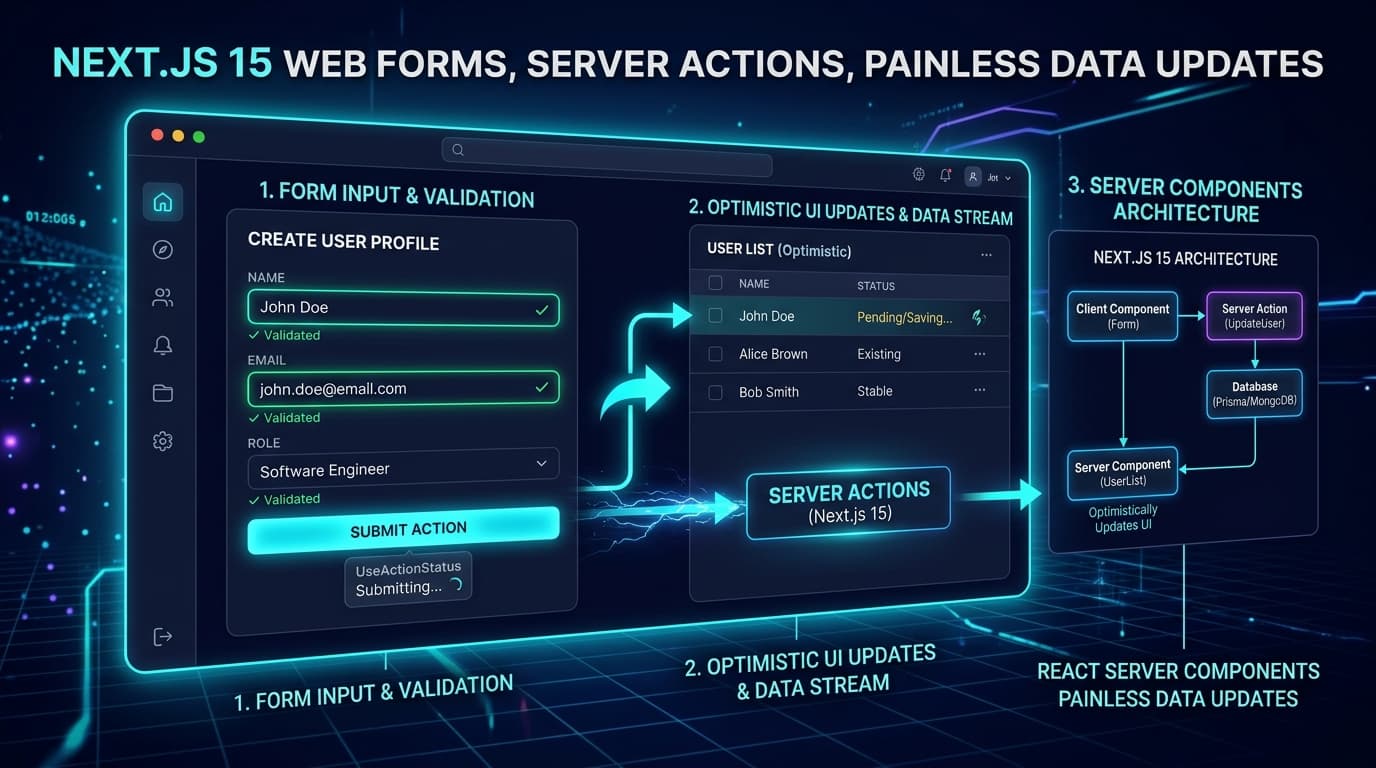
Building Simpler Web Forms: How Next.js 15 Makes Data Updates Quick and Painless
Master modern form handling with Next.js 15 and React 19. Learn how native Server Actions, useActionState, useOptimistic, and Zod schema validation eliminate boilerplate, achieve sub-50ms feedback, and ensure flawless data integrity.

AI Tool Creation & Software Modernization
Upgrading Outdated Software with AI: How Modern Teams Automate Boring Code Updates Safely
Discover how modern engineering teams safely automate legacy software modernization using AI. Learn how Abstract Syntax Tree (AST) parsing, synthetic characterization testing, sandboxed refactoring agents, and human-in-the-loop verification reduce migration time by 80% with zero production downtime.

Website Development & Search Visibility
Growing Your Organic Traffic: How to Build Helpful, High-Ranking Pages at Scale
Master the modern engineering framework for scaling organic search traffic. Learn how to combine Next.js 15, programmatic SEO, semantic topic authority, and AI search optimization (GEO) to build hundreds of helpful, high-ranking pages that attract qualified buyers.