Pay-As-You-Go Billing for AI Apps: How to Set Up Simple Usage-Based Pricing with Stripe
Master usage-based pay-as-you-go billing for AI applications using Stripe Metered Billing, pre-funded credit wallets, and real-time token tracking. Protect profit margins against LLM API expenses while delivering a friction-free customer experience.

TL;DR: Monetizing AI applications presents a unique financial puzzle that traditional SaaS subscription models were never designed to solve. When users consume variable GPU compute, large context windows, and multimodal tokens with every click, a flat $29/month subscription creates severe margin risks—a few power users can generate hundreds of dollars in LLM API bills, wiping out your profits. Conversely, requiring high upfront subscription commitments scares away casual prospects. The solution is Usage-Based Pay-As-You-Go Billing powered by Stripe. By combining pre-funded token credit wallets, real-time API usage metering, automated auto-recharge triggers, and transparent user budget caps, AI micro-SaaS founders can protect 75%+ gross margins while removing checkout friction for new customers. Explore our custom AI tool creation services to productize your AI models, discover our bespoke AI system creation capabilities, read our guide on building micro-SaaS AI tools with recurring revenue, learn about B2B SaaS pricing and packaging architecture, explore startup unit economics and scaling ad spend, and discover our guide on Zapier vs. Make vs. Custom Code.
The 5 W's of Usage-Based AI Monetization
To understand how modern AI founders structure and implement pay-as-you-go pricing with Stripe, here is the complete breakdown using the 5 W's:
- Who: AI tool builders, SaaS founders, CTOs, product managers, and engineering teams launching generative AI apps, voice agents, automated document parsers, and custom copilot tools.
- What: Metered Usage-Based Billing & Credit Wallet Architecture—a monetization framework where customers purchase pre-paid usage credits or pay per unit of consumption (tokens, minutes, image renders, or API runs), with Stripe handling automated payment collection and wallet replenishment.
- Where: Deployed across Next.js full-stack web applications, Stripe Billing & Webhook APIs, and secure database credit ledgers (PostgreSQL, Supabase, Redis).
- When: Implemented whenever an application's underlying cost-of-goods-sold (COGS) scales directly with user activity—such as LLM inference, vector database lookups, transcription minutes, or multimodal image/video generation.
- Why: Flat-rate pricing exposes AI businesses to catastrophic margin collapse from power users and high customer churn from light users. Pay-as-you-go pricing perfectly aligns user value with underlying API costs, guarantees profitable gross margins, and eliminates customer hesitation at sign-up.
┌─────────────────────────────────────────────────────────────────────────┐
│              The 5 W's: Usage-Based Stripe AI Billing                   │
├──────────────┬──────────────────────────────────────────────────────────┤
│ Dimension    │ Plain-English Explanation                                │
├──────────────┼──────────────────────────────────────────────────────────┤
│ 👤 WHO       │ AI founders, micro-SaaS creators & product leaders      │
│ 🧠 WHAT      │ Pre-paid credit wallets, metered billing & auto-top-up  │
│ 🔒 WHERE     │ Stripe Billing, Next.js Server Actions & Redis ledgers  │
│ ⏱️ WHEN      │ Monetizing LLM tokens, voice minutes & image generators │
│ 🎯 WHY       │ Protect 75%+ gross margins & eliminate sign-up friction │
└──────────────┴──────────────────────────────────────────────────────────┘
The Core Analogy: The All-You-Can-Eat Buffet vs. The Smart Pre-Paid Transit Card
To understand why flat subscriptions fail for AI tools—and why usage-based credit models work so brilliantly—consider this consumer hospitality comparison:
The Flawed Model: The All-You-Can-Eat Premium Steak Buffet (Flat $29/mo SaaS)
Imagine opening a luxury restaurant with a flat $29 flat-rate buffet:
- Casual Diners Get Overcharged: A guest who eats a light salad feels ripped off paying $29 and cancels their reservation next time (casual users churning due to high fixed subscription fees).
- Competitive Eaters Eat for Free: A competitive bodybuilder arrives, consumes 15 dry-aged ribeye steaks ($180 in wholesale meat costs), and pays only $29. The restaurant loses $151 on that single guest (power users generating massive LLM API bills that destroy gross margins).
- Unpredictable Inventory Panic: The kitchen never knows how much food will be eaten each day, causing unpredictable cash flow crises (wild volatility in monthly OpenAI or Anthropic API bills).
The Modern Model: The Smart Pre-Paid Metro Transit Card (Pre-Funded Stripe Credit Wallet)
Now imagine riding a modern metropolitan transit system:
- Zero Friction Entry: You tap your digital card to start your journey; you only pay for the exact distance you travel (pay only for the exact tokens or pages processed).
- Frictionless Auto-Top-Up: You preload $20 onto your balance. When your card drops below $3, it automatically tops up by $20 from your linked payment method—no manual checkout required.
- Guaranteed Profit Margins: Every mile traveled generates a guaranteed 75% profit margin for the transit authority, regardless of whether a passenger rides once a month or 100 times a day.
- Complete Transparency: Riders can view their exact trip history and set monthly spend caps on their smartphone in seconds.
┌─────────────────────────────────────────────────────────────────────────┐
│        AI Pricing Evolution: Flat Subscriptions vs. Stripe Wallets      │
├─────────────────────────────────────────────────────────────────────────┤
│ 🔴 THE LEGACY WAY (Flat Monthly $29 Subscription)                       │
│ [User pays $29/mo] ──► [Unlimited LLM Inference Calls]                  │
│                                  │                                      │
│                                  ▼                                      │
│         [Power User: 120M Tokens Consumed ($180 API Cost)]              │
│ ❌ Net Loss: -$151 on power users        ❌ Light users churn rapidly   │
│ ❌ Fragile gross margins (<20%)         ❌ Unpredictable cloud expenses│
├─────────────────────────────────────────────────────────────────────────┤
│ 🟢 THE STRIPE CREDIT WALLET WAY (Pre-Funded Pay-As-You-Go)              │
│ [User pre-funds $20 wallet] ──► [AI Request Processed]                  │
│                                           │                             │
│                                           ▼                             │
│                  [Real-Time Token Deduction ($0.04)]                    │
│                                           │                             │
│                                           ▼                             │
│         [Balance drops <$3] ──► [Stripe Auto-Top-Up +$20]               │
│ ✅ Guaranteed 75%+ gross margin         ✅ Near-zero barrier to entry  │
│ ✅ Zero risk of unpaid overages         ✅ Transparent usage dashboard │
└─────────────────────────────────────────────────────────────────────────┘
4 Core Architectural Pillars of Usage-Based AI Billing
Engineering a reliable, fraud-resistant pay-as-you-go billing engine requires four coordinated architectural pillars:
┌─────────────────────────────────────────────────────────────────────────┐
│         4 Pillars of Usage-Based Stripe AI Billing Architecture         │
├─────────────────────────────────────────────────────────────────────────┤
│ 1. 💳 PRE-FUNDED CREDIT WALLETS & LEDGERS                               │
│    Charging upfront to eliminate bad debt and uncollectible API debt    │
├─────────────────────────────────────────────────────────────────────────┤
│ 2. ⚡ ATOMIC REAL-TIME USAGE & TOKEN METERING                           │
│    Tracking input, output, and cached tokens at the application gateway │
├─────────────────────────────────────────────────────────────────────────┤
│ 3. 🔄 STRIPE AUTOMATED TOP-UP & METERED BILLING                         │
│    Triggering friction-free micro-charges using Stripe Off-Session Auth │
├─────────────────────────────────────────────────────────────────────────┤
│ 4. 🛡️ SPEND CAPS, FRAUD GUARDS & CLIENT BUDGET ALERTS                   │
│    Empowering customers to set monthly limits and prevent billing shock │
└─────────────────────────────────────────────────────────────────────────┘
1. Pre-Funded Credit Wallets vs. Post-Paid Invoicing
In traditional SaaS, companies bill users after the month concludes (post-paid invoicing). In AI applications, post-paid invoicing is extremely dangerous: a malicious user or hijacked API key could consume $5,000 of GPU compute in 48 hours, and when Stripe attempts to charge their card at the end of the month, the card declines, leaving you with unrecoverable API debt.
Pre-Funded Credit Wallets eliminate this risk entirely:
- Customers deposit funds upfront (e.g., $10, $25, or $100) in exchange for platform credits (e.g., 100,000 AI Credits).
- Every AI generation deducts credits from their database ledger atomically.
- If the credit balance hits zero, further AI requests are paused immediately until the wallet is replenished.
2. Atomic Real-Time Usage & Token Metering
Modern LLM APIs charge different rates for prompt tokens, completion tokens, prompt caching hits, and multimodal image dimensions.
Your billing engine must track these metrics accurately:
- Prompt vs. Output Weighting: Completion tokens cost up to 4x more than prompt tokens; your credit deduction formula should reflect this ratio (e.g., 1 Input Token = 1 Credit, 1 Output Token = 4 Credits).
- Atomic Database Decrements: Credit subtractions must use atomic SQL queries (
UPDATE wallets SET balance = balance - :cost WHERE user_id = :id AND balance >= :cost) or Redis transactions to prevent race conditions during rapid concurrent requests.
3. Stripe Automated Top-Up via Off-Session Payment Intents
The friction of having to manually enter credit card details every time a balance runs out destroys user engagement.
By combining Stripe Customer Payment Methods with Off-Session Setup Intents, you can offer seamless auto-recharge:
- When a user enables Auto-Top-Up, they set two parameters: (1) Low Balance Threshold (e.g., $5) and (2) Top-Up Amount (e.g., $20).
- When a background database decrement detects the balance dropping below the threshold, a serverless job triggers a Stripe Payment Intent with
off_session: true. - The customer receives an instant email receipt, and their AI workflow continues without interruption.
4. Spend Caps, Fraud Guards & Client Budget Alerts
Nothing erodes customer trust faster than unexpected credit card charges.
Providing transparent user controls is essential for enterprise adoption:
- Configurable Monthly Spend Limits: Allow users to set a strict ceiling (e.g., "Never charge my card more than $100 in a calendar month").
- Real-Time Usage Telemetry: Provide clear UI charts breaking down token consumption by team member, project, and tool.
- Anomaly Detection: Flag sudden spikes in generation frequency (e.g., 500 requests in 1 minute) and trigger email confirmations to prevent compromised API key abuse.
Comprehensive Technical Comparison Matrix
Here is how Pre-Funded Stripe Credit Wallets compare to Flat Monthly Subscriptions and Post-Paid Metered Invoicing:
| Evaluation Dimension | Flat Monthly Subscription ($29/mo) | Post-Paid Invoicing (End of Month) | Pre-Funded Stripe Credit Wallet (Recommended) |
|---|---|---|---|
| Gross Margin Protection | ❌ Highly volatile (<20% to negative) | ⚠️ Moderate (Card decline risk) | ✅ 100% Protected (Guaranteed 75%+) |
| Uncollectible Debt Risk | Zero (Prepaid fixed) | High (Cards decline on high bills) | Zero (Compute never exceeds balance) |
| Barrier to Entry for New Users | High ($29 upfront before value seen) | Low (Pay later) | Extremely Low ($5 micro-deposit or free credits) |
| Power User Revenue Capture | ❌ $0 extra revenue from heavy users | ✅ High | ✅ High (Revenue scales linearly with usage) |
| Customer Billing Shock Risk | Zero | High (Surprise $400 bills) | Zero (User-configured auto-top-up caps) |
| Database Concurrency Complexity | Minimal (Boolean active check) | Moderate (Log events) | High (Atomic ledger transactions required) |
| Stripe Processing Fee Efficiency | High (1 monthly charge) | High (1 monthly invoice) | High (Charges in $20–$100 tranches) |
Technical Architecture & Implementation Blueprint
At LaunchLive Studio, we engineer resilient monetization infrastructure for modern AI startups. Below is a complete, production-ready TypeScript blueprint demonstrating how to build a pre-funded credit wallet with Stripe Auto-Top-Up and atomic token deduction in Next.js 15.
┌─────────────────────────────────────────────────────────────────────────┐
│        Usage-Based AI Credit Wallet & Auto-Top-Up Execution Flow        │
├─────────────────────────────────────────────────────────────────────────┤
│  [User submits AI generation request in Web App]                        │
│                           │                                             │
│                           ▼                                             │
│  [1. Pre-Flight Check: Verify user wallet balance >= minimum cost]      │
│  ├── ❌ If Balance < $0.05: Return "Insufficient Credits" Modal         │
│  └── ✅ If Balance >= $0.05: Proceed to AI Inference                    │
│                           │                                             │
│                           ▼                                             │
│  [2. AI Execution: OpenAI / Anthropic inference call runs]              │
│  └── Returns completion text + exact token usage object                 │
│                           │                                             │
│                           ▼                                             │
│  [3. Atomic Database Deduction: Subtract exact cost from balance]       │
│                           │                                             │
│                           ▼                                             │
│  [4. Auto-Recharge Trigger Check]                                       │
│  ├── If balance <= $3.00 & auto_recharge_enabled:                       │
│  │    └── Dispatch Stripe Off-Session Payment Intent ($20.00)           │
│  └── Update UI balance badge in real-time (<50ms)                       │
└─────────────────────────────────────────────────────────────────────────┘
Step 1: Atomic Credit Wallet Ledger (PostgreSQL Schema & Operations)
-- SQL Schema: User Credit Wallet Table
CREATE TABLE user_wallets (
  user_id VARCHAR(64) PRIMARY KEY,
  stripe_customer_id VARCHAR(64) NOT NULL,
  default_payment_method_id VARCHAR(64),
  credit_balance_cents INTEGER NOT NULL DEFAULT 500, -- e.g. $5.00 welcome bonus
  auto_recharge_enabled BOOLEAN NOT NULL DEFAULT FALSE,
  recharge_threshold_cents INTEGER NOT NULL DEFAULT 300, -- Trigger at $3.00
  recharge_amount_cents INTEGER NOT NULL DEFAULT 2000,   -- Top up $20.00
  monthly_spend_cap_cents INTEGER NOT NULL DEFAULT 10000 -- Max $100/month
);
// lib/billing/wallet-ledger.ts
import { db } from '@/lib/db';

export async function deductCreditsAtomically(
  userId: string,
  costCents: number
): Promise<{ success: boolean; newBalanceCents: number; shouldTriggerRecharge: boolean }> {
  // Execute atomic decrement to prevent race conditions
  const result = await db.query(
    `UPDATE user_wallets
     SET credit_balance_cents = credit_balance_cents - $1
     WHERE user_id = $2 AND credit_balance_cents >= $1
     RETURNING credit_balance_cents, auto_recharge_enabled, recharge_threshold_cents`,
    [costCents, userId]
  );

  if (result.rowCount === 0) {
    return { success: false, newBalanceCents: 0, shouldTriggerRecharge: false };
  }

  const wallet = result.rows[0];
  const shouldTriggerRecharge =
    wallet.auto_recharge_enabled &&
    wallet.credit_balance_cents <= wallet.recharge_threshold_cents;

  return {
    success: true,
    newBalanceCents: wallet.credit_balance_cents,
    shouldTriggerRecharge,
  };
}
Step 2: Stripe Off-Session Auto-Recharge Worker
// lib/billing/stripe-recharge.ts
import Stripe from 'stripe';
import { db } from '@/lib/db';

const stripe = new Stripe(process.env.STRIPE_SECRET_KEY!, {
  apiVersion: '2024-06-20' as any,
});

export async function processAutoRecharge(userId: string): Promise<boolean> {
  const walletResult = await db.query(
    'SELECT * FROM user_wallets WHERE user_id = $1',
    [userId]
  );
  const wallet = walletResult.rows[0];

  if (!wallet || !wallet.default_payment_method_id) {
    return false;
  }

  try {
    // Trigger off-session payment intent using stored payment method
    const paymentIntent = await stripe.paymentIntents.create({
      amount: wallet.recharge_amount_cents,
      currency: 'usd',
      customer: wallet.stripe_customer_id,
      payment_method: wallet.default_payment_method_id,
      off_session: true,
      confirm: true,
      description: 'AI Application Usage Credit Auto-Recharge',
      metadata: { userId, type: 'auto_recharge' },
    });

    if (paymentIntent.status === 'succeeded') {
      // Add credits back to wallet balance
      await db.query(
        'UPDATE user_wallets SET credit_balance_cents = credit_balance_cents + $1 WHERE user_id = $2',
        [wallet.recharge_amount_cents, userId]
      );
      console.log(`[Billing] Auto-recharged ${wallet.recharge_amount_cents} cents for user ${userId}`);
      return true;
    }
    return false;
  } catch (error: any) {
    console.error('Stripe off-session recharge failed:', error.message);
    // Send email alert to user to update payment method
    return false;
  }
}
Step 3: Next.js 15 Server Action for AI Generation with Metered Billing
// app/actions/generate-ai-content.ts
'use server';

import { OpenAI } from 'openai';
import { deductCreditsAtomically } from '@/lib/billing/wallet-ledger';
import { processAutoRecharge } from '@/lib/billing/stripe-recharge';

const openai = new OpenAI({ apiKey: process.env.OPENAI_API_KEY });

// Pricing calculation: e.g., $0.005 per 1,000 input tokens, $0.015 per 1,000 output tokens
function calculateCostInCents(promptTokens: number, completionTokens: number): number {
  const inputCost = (promptTokens / 1000) * 0.5; // cents
  const outputCost = (completionTokens / 1000) * 1.5; // cents
  const marginMultiplier = 4.0; // 75% gross profit margin
  return Math.ceil((inputCost + outputCost) * marginMultiplier);
}

export async function generateContentWithBilling(userId: string, prompt: string) {
  // 1. Minimum balance check (e.g. 10 cents minimum)
  const estimatedCostCents = 10;
  const preCheck = await deductCreditsAtomically(userId, estimatedCostCents);
  if (!preCheck.success) {
    return {
      success: false,
      error: 'Insufficient credit balance. Please top up your wallet to continue.',
    };
  }

  try {
    // 2. Execute AI completion
    const completion = await openai.chat.completions.create({
      model: 'gpt-4o-mini',
      messages: [{ role: 'user', content: prompt }],
      temperature: 0.7,
    });

    const usage = completion.usage;
    const actualCostCents = usage
      ? calculateCostInCents(usage.prompt_tokens, usage.completion_tokens)
      : estimatedCostCents;

    // Adjust wallet difference if actual differs from estimate
    const adjustment = actualCostCents - estimatedCostCents;
    if (adjustment !== 0) {
      await deductCreditsAtomically(userId, adjustment);
    }

    // 3. Trigger asynchronous auto-recharge if balance dipped below threshold
    if (preCheck.shouldTriggerRecharge) {
      processAutoRecharge(userId).catch(console.error);
    }

    return {
      success: true,
      content: completion.choices[0].message.content,
      tokensUsed: usage?.total_tokens || 0,
      costCents: actualCostCents,
    };
  } catch (error) {
    // Refund reserved credits if inference failed
    await deductCreditsAtomically(userId, -estimatedCostCents);
    return { success: false, error: 'AI generation failed. Credits have been refunded.' };
  }
}
Real-World Case Study: How an AI Copywriting Tool Reached 78% Gross Profit Margins
┌─────────────────────────────────────────────────────────────┐
│    AI Tool Monetization & Margin Optimization Metrics       │
├─────────────────────────────────────────────────────────────┤
│ Operational Metric           │ Old ($29/mo Flat Sub)│ Usage Wallet   │
├──────────────────────────────┼──────────────────────┼────────────────┤
│ 💰 Gross Profit Margin       │ 14.2% (Fragile)      │ 78.4% (+64%)   │
│ 🛑 Monthly Customer Churn    │ 11.6%                │ 3.8% (-67%)    │
│ 🚀 Sign-Up Conversion Rate   │ 2.4%                 │ 6.1% (+154%)   │
│ 💸 Average Revenue Per User  │ $29.00 / month       │ $48.20 / month │
│ ❌ Power User Margin Losses  │ -$1,420 / month      │ $0 (Zero loss) │
└─────────────────────────────────────────────────────────────┘
The Challenge:
An AI marketing platform providing automated SEO blog and ad copy generation launched with a standard $29/month unlimited subscription plan.
Within four months, the founder faced serious unit economic distress:
- The top 5% of "power users" (agencies and scrapers) were generating thousands of articles daily, running up $1,420 in monthly OpenAI API bills while paying only $29 each.
- Meanwhile, casual users who only generated 2 or 3 articles per month felt $29 was overpriced and churned after 30 days.
- Overall gross profit margin sat at a razor-thin 14.2%, leaving no budget for marketing, engineering, or server hosting.
The LaunchLive Studio Solution:
- Designed a Transparent Pre-Funded Credit System: We replaced the unlimited plan with a transparent credit system where 1 Credit = 100 generated words.
- Built Seamless Stripe Auto-Recharge: Users started with $5 in free credits, after which they selected an auto-recharge pack ($15, $35, or $75) that replenished automatically when their balance reached $2.
- Implemented Transparent Cost Estimators: Before clicking "Generate 3,000-Word Article," the UI displayed a clear badge: "Cost: ~12 Credits ($0.12). Remaining Balance: 450 Credits."
- Configured Team Spend Limits: Agency accounts were given the ability to assign credit quotas to individual writers.
The Results:
- Gross profit margins surged from 14.2% to 78.4%, permanently securing company profitability.
- Sign-up conversion rate increased by 154% (from 2.4% to 6.1%), because new users loved starting with low-cost $5 micro-top-ups instead of committing to an upfront $29 monthly subscription.
- Average Revenue Per User (ARPU) increased from $29.00 to $48.20, as agency power users naturally spent more as their businesses grew.
5 Critical Traps to Avoid When Building Usage-Based AI Billing
When implementing pay-as-you-go billing with Stripe for your AI app, be sure to avoid these five common pitfalls:
- Charging Post-Paid Invoices for Unbounded AI Compute: Never let users run thousands of dollars in AI compute before attempting to bill their credit card at the end of the month. Always use pre-funded credit wallets to prevent bad debt from declined cards.
- Ignoring Race Conditions During Concurrent API Calls: If a user opens 10 browser tabs and triggers simultaneous AI generations, non-atomic database balance checks will allow them to overdraw their wallet. Always use atomic SQL updates or Redis distributed locks.
- Failing to Refund Credits on Failed AI Outputs: If an upstream LLM API returns a 504 gateway timeout or content policy error, ensure your backend automatically refunds the reserved credits. Forgetting this causes immediate customer support frustration.
- Hiding Real-Time Token Costs from Users: Surprising users with unexpected credit deductions damages trust. Always show estimated credit costs before action buttons and maintain a clear, downloadable billing audit log in the user settings.
- Overlooking Stripe Minimum Charge Limits: Stripe enforces a minimum charge amount (typically $0.50 USD). Do not attempt to trigger Stripe credit card charges for individual $0.02 API calls. Always bundle charges into $10, $20, or $50 pre-funded wallet packages.
Frequently Asked Questions (FAQ)
How does Stripe handle micro-transactions without high processing fees eating profits?
Stripe charges a standard processing fee (2.9% + $0.30 per successful charge). If you charge a user's credit card $0.05 for every individual AI prompt, the $0.30 fixed fee will destroy your margin. By using a Pre-Funded Wallet Model, you charge the customer's card in larger tranches ($10, $25, or $50), where the $0.30 fee represents less than 1.5% of the transaction, preserving your high gross margins.
What happens if a user's automatic recharge card declines while an AI job is running?
In a properly architected pre-funded system, the AI job only runs if the user already has enough credits in their wallet for that specific task. If their balance dips below the recharge threshold and the auto-top-up payment declines, their current job completes successfully, but subsequent requests are paused until they update their billing information in the Stripe Customer Portal.
Can I mix a monthly base subscription with usage-based overages?
Yes! This hybrid model is extremely popular in B2B SaaS. You can charge a base subscription (e.g., $39/month) that includes 50,000 monthly credits. If the user exceeds their included allocation, additional usage is billed at pay-as-you-go rates via Stripe Metered Billing or auto-recharge top-ups.
How do I handle refunds if a customer is unhappy with the AI output quality?
Your application should include a built-in "Regenerate / Report Issue" button that automatically refunds the spent credits to the user's wallet if they flag an unsatisfactory or broken completion within 60 seconds of generation.
How does LaunchLive Studio help AI founders monetize their applications?
At LaunchLive Studio, we specialize in building full-stack AI web applications, custom micro-SaaS tools, and automated monetization infrastructure. We handle end-to-end Stripe integration, credit ledger architecture, real-time token tracking, and high-converting landing pages so you can launch a profitable AI product in record time.
Ready to Build a High-Margin, Pay-As-You-Go AI Application?
Don't let rigid pricing models and unpredictable API bills kill your startup's profitability.
👉 Book a Free 30-Minute AI Monetization Strategy Session with the LaunchLive Studio engineering team today. We will review your product economics, design a custom Stripe usage-based billing architecture, and help you launch with confidence.
Enjoyed this insight
on AI Tool Creation & SaaS Monetization?
"At Launch Live Studio, we help ambitious brands implement these exact systems to drive scalable revenue."
FREE 30-MINUTE STRATEGY CONSULTATION • CLEAR ANSWERS ON OUR FAQ
Related Growth Guides.

Workflow Automation & Systems Integration
Zapier vs Make vs Custom Code: Which Automation Tool Fits Your Business Best?
An honest, practical guide comparing Zapier, Make (Integromat), and Custom Code APIs for modern businesses. Discover when to use no-code tools for fast marketing automations, when to use Make for complex multi-step data routing, and when custom serverless microservices save thousands in platform subscription fees.

AI System Creation & Enterprise Search
Helping AI Understand Long Documents: Easy Ways to Prevent Confusing and Wrong Answers
Discover how modern engineering teams help AI models understand massive multi-hundred-page documents without getting confused, hallucinating wrong answers, or losing critical context. Learn practical techniques including semantic hierarchical chunking, hybrid keyword and vector search, cross-encoder re-ranking, and citation-grounded verification.
Website Development & Full-Stack Architecture
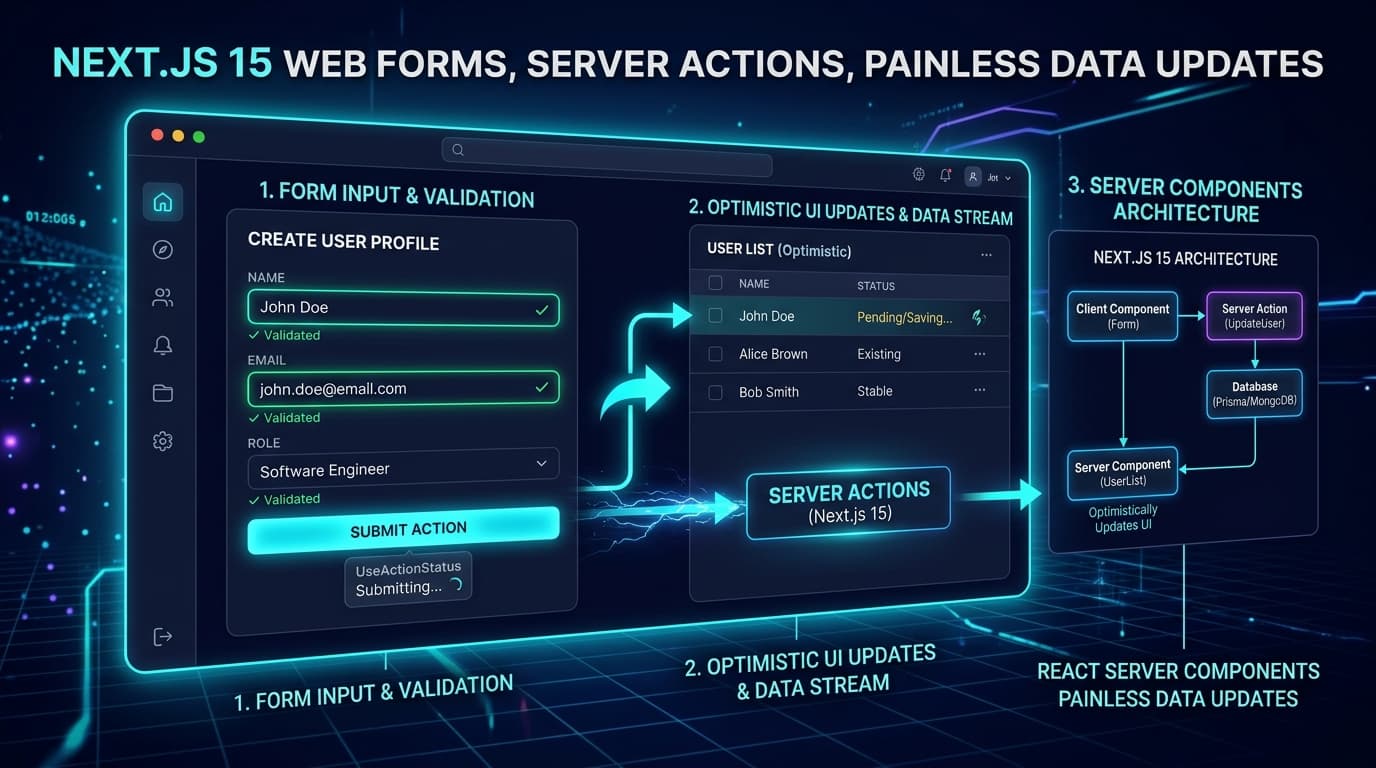
Building Simpler Web Forms: How Next.js 15 Makes Data Updates Quick and Painless
Master modern form handling with Next.js 15 and React 19. Learn how native Server Actions, useActionState, useOptimistic, and Zod schema validation eliminate boilerplate, achieve sub-50ms feedback, and ensure flawless data integrity.